Heroes vs Hordes: Survival RPG
- 4.7
- Rating
- 10.00M
- Installs
- Free
- Price

 Analysis by App-foxy
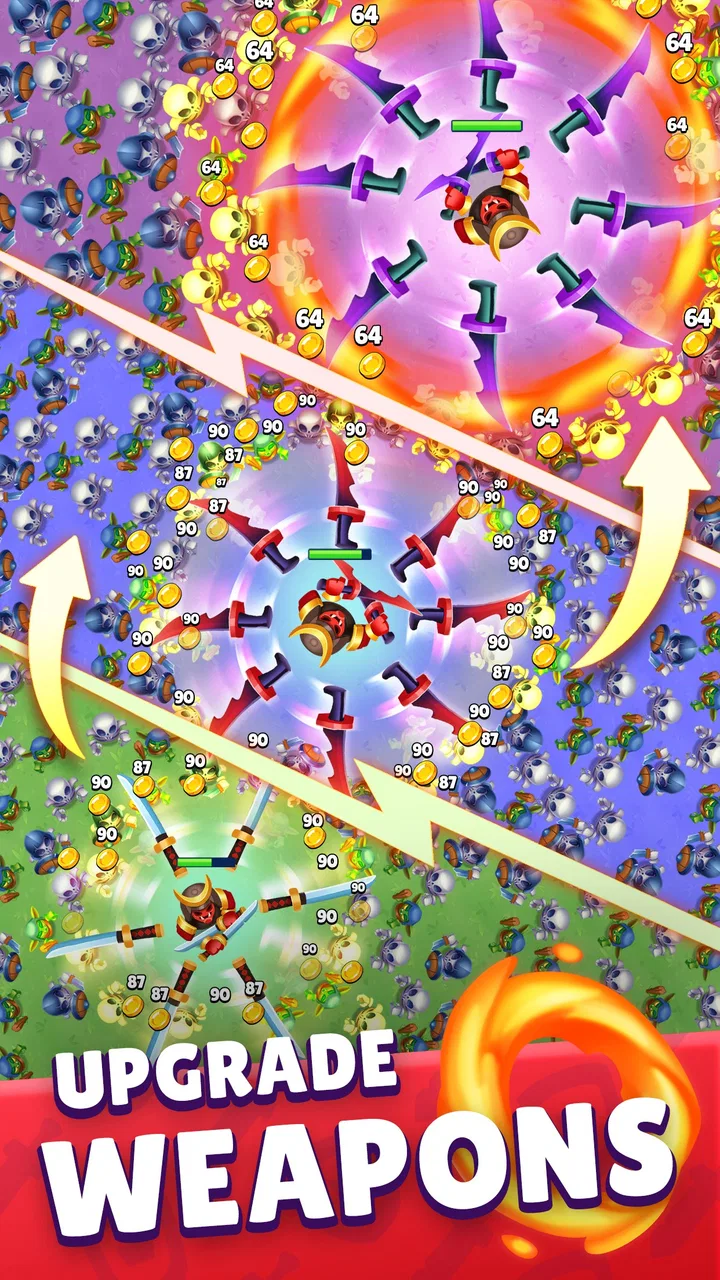
I first noticed Heroes vs Hordes: Survival RPG because it looks like the kind of adventure game that can fill a short break without asking me to learn a huge control scheme. After spending time with its wave-based battles, I found a game built around a simple question: can I keep one hero alive while the screen becomes increasingly crowded with enemies? That straightforward idea works surprisingly well on a phone, especially when I want quick action rather than a long story session.
Developed by SWIFT GAMES, this free adventure game combines roguelite progression with repeated battles, loot, and hero upgrades. Its average rating is 4.7 from around 412 thousand ratings, and it has passed 5 million installs, so it clearly has a large audience. Those figures do not automatically make it a good fit for everyone, but they match my impression that the game is easy to understand, satisfying in short bursts, and broad enough to attract players who normally avoid complicated role-playing games.
How it works when a phone is shared at home
The most useful way I can imagine playing it in a household is on a shared phone or tablet during small gaps in the day. One person might play a run while waiting for dinner, then hand the device to someone else for a turn. The game’s central loop is easy to explain: enter a battle, survive enemy waves, collect useful rewards, and improve the hero for the next attempt. That makes it more approachable than a game that requires a long explanation before another household member can try it.
You May Also Like

 Blood Strike: 2.5 Anniversary
Blood Strike’s Loadouts Turn Every Drop Into a Tactical Gamble
A close look at Blood Strike’s custom loadouts: how fast access to signature weapons reshapes its battle royale rhythm, rewards preparation, and narrows the gap between fights.

 Pandora - Music & Podcasts
Pandora’s Music Is Easy to Start, but Harder to Recover
Pandora’s strength is its low-effort path from a seed to a station. Its weak spot is how much confidence it asks you to place in connection, setup, and quiet recovery.

 8 Ball Pool
 Is Built on Rivalries, Rematches, and Routine
A close look at the rivalries, rematches, shared routines, and unanswered safety questions that turn a quick pool match into a persistent mobile community.

 Samsung Music
’s Quiet Strength Is Playing What You Already Own
Its reach comes less from spectacle than from dependable access to a personal library. That simplicity is both the app’s strongest retention engine and its ceiling.

 AccuWeather: Weather Radar
AccuWeather Review: A Quick, Clear Forecast for Everyday Decisions
For everyday plans, the best forecast is the one you can understand quickly. AccuWeather makes rain timing, radar, and local conditions easy to act on, with a few trade-offs.

 Hill Climb Racing
Why Hill Climb Racing Still Turns Crashes Into One More Run
A tiny car, a bumpy hill and one more upgrade: Hill Climb Racing keeps resurfacing because its simple chaos makes every near-miss feel personal.
More From Our News Desk



There is also a nice difference between watching and playing. Someone sitting nearby can quickly understand what is happening because the action is visible: enemies close in, the hero fights back, and upgrades change the direction of the run. A younger player can watch an older sibling make choices, while an adult can help with decisions without needing to take over the entire game. I would not call it a traditional cooperative experience, though. The shared-use appeal comes from taking turns and discussing choices, not from assuming that several people are controlling the same battle together.
That distinction matters if you are choosing a game for a family device. If your main goal is a game where two people actively play side by side, this is not the obvious choice. If you want something that can be passed around and understood quickly, it makes more sense. I found that the strongest household use case is informal: one person starts a run, another comments on the upgrade choices, and the device returns to the first player when there is time.
The first sessions are easy to share
The early appeal comes from how quickly the game communicates its purpose. I do not need to memorize a large inventory or study a complicated map before enjoying a battle. The survival format gives each session a clear rhythm, and the roguelite structure makes failure feel like part of the process rather than a complete waste of time. I can try a different approach, learn from the previous run, and work toward stronger heroes or better loot.
For shared use, I recommend agreeing on whose turn it is before launching a run. That sounds obvious, but a run can become absorbing once the enemy crowd grows and an upgrade decision appears. On a family tablet, a simple turn-taking rule prevents the most common frustration: someone else taking over just when the current player reaches an important choice. The game encourages conversation, but the household still needs to provide the boundaries.
Another practical point is that the game is better suited to players who enjoy repeating a format than to people looking for a one-time adventure with a fixed ending. The satisfaction comes from improving decisions over several attempts. A player who dislikes retrying battles or seeing familiar patterns may lose interest, while someone who enjoys gradually understanding a system can find the loop quite compelling.
Setting expectations before handing over the device
Because the game is free to download, it is easy to let someone try it without making a purchase first. That is useful for a shared device, but free access should not be confused with a completely cost-free experience. In-app purchases range from $0.99 to $349.99 per item. I would treat that as a reason to set a household rule before anyone plays, particularly if the device is connected to a payment method.
I would also explain that progress in a game like this is designed around upgrades and repeated attempts. A player may feel tempted to speed up improvement when a run goes badly or when a stronger hero seems close. That does not mean every player will want to spend money, but it does mean the person using the device should know where the free experience ends and optional spending begins. For children, this conversation is more important than the download itself.
The game is marked Everyone 10+, which gives a useful age context, but an age label cannot replace a parent or guardian’s judgement. I would still watch a first session, not because the basic idea is difficult, but because the pace, enemy pressure, and purchase options may affect different children in different ways. A child who enjoys strategic repetition may find it engaging; another may become frustrated by losing a promising run and want to buy a shortcut.
On a shared device, account boundaries deserve attention as well. I would avoid assuming that every player’s progress, choices, or purchases will automatically remain separate. Before several people use the same installation, I would check how the game handles progress on that device and decide whether one shared profile is acceptable. If each household member needs a completely independent journey, a shared phone may create confusion even if the battles themselves are easy to pass around.
Why coordination improves the experience
The most interesting household conversations happen around upgrades. Instead of simply asking whether a player won, I would ask why they chose a particular improvement and whether it helped them survive the next wave. This turns a short action game into a small decision-making exercise. The best advice is often not “choose the strongest-looking reward,” but “choose what supports the way you are already playing.” That kind of discussion is more useful than trying to control every move.
I also found that timing matters. A player may want to stop after a battle, but another person may be waiting for the next reward screen. Agreeing on natural stopping points makes the game less disruptive in a household. I would use the end of a run or a clear upgrade decision as the handoff point, rather than interrupting the middle of a difficult wave. This is especially helpful when the device is also used for schoolwork, messages, or other everyday tasks.
For adults introducing the game to a child, I would avoid turning every session into a lesson. The game works best when advice stays occasional. Letting the child make a poor upgrade choice and see the result can teach more than giving the correct answer every time. The roguelite format supports that approach because experimentation is part of the appeal. A failed attempt can become a useful conversation rather than an argument about playing correctly.
There is a trade-off here: the game is easy to share physically, but not necessarily ideal for sharing emotionally. A competitive household could turn each run into a comparison of who survived longer or collected better rewards. That can be motivating for some players and unpleasant for others. I would frame progress as personal improvement, especially for younger users, because the repeated structure is more enjoyable when failure is treated as information rather than a scorecard.
What makes it different from familiar alternatives
Compared with a conventional role-playing adventure, this game places more emphasis on surviving a sequence of threats than on following a large narrative. That makes it faster to start and easier to fit into a busy day, but it also means players who want deep dialogue, exploration, or a carefully directed story may find it light. I would choose it for action and build experimentation, not for a rich cinematic journey.
Compared with a traditional arcade game, it offers more persistence through loot and hero upgrades. My choices can influence later attempts, so the experience is not only about reflexes. At the same time, it does not have the calm simplicity of a puzzle game. The screen can become busy, and the pressure rises as waves continue. A player looking for something relaxing before sleep may prefer a slower alternative.
It also sits between an action game and a role-playing game. The battles provide immediate excitement, while the upgrade layer gives me a reason to return. That balance is the main strength, but it can also expose the game’s limitation: the repeated structure may feel narrow if I want constant novelty. The game is at its best when I enjoy refining a strategy within familiar rules rather than needing every session to introduce a completely new type of activity.
Practical strengths and real friction
My favorite feature is the way the game makes small decisions feel meaningful during a run. A reward is not just a trophy; it becomes part of the plan for surviving what comes next. I learned to think about the next difficult stretch instead of choosing only what looked powerful immediately. That is a useful habit for new players: pause briefly at upgrade moments and consider whether the choice improves survival now, supports future growth, or merely looks attractive.
Another strength is its suitability for uneven attention. I can approach it as a short activity, but I can also stay longer when a run becomes interesting. That flexibility is valuable on a shared device because not every household member has the same amount of free time. One person can enjoy a quick attempt, while another can spend more time experimenting with heroes and loot.
The main friction is repetition. The same basic survival idea that makes the game accessible can eventually become predictable. If I am not in the mood to retry a battle or adjust a build, the game has less to offer than a story-driven adventure or a constantly changing strategy title. I also think the purchase range requires deliberate handling. The game can be enjoyed for free, but the presence of optional items means I would not hand it to a child on a payment-enabled device without discussing spending first.
Another limitation is that the game’s appeal depends heavily on personal tolerance for pressure. Some players enjoy watching a manageable battle turn into a crowded survival test. Others may find the visual intensity tiring, especially on a smaller phone. I would try it on the device that will actually be used at home before deciding whether it is comfortable for long sessions. A game that feels clear on a tablet may feel more cramped on a compact screen.
Version, access, and who should try it
The current version is 7.6.0, and the game supports devices running Android 7.1 or later. It is free to start, which lowers the barrier for trying it on an older compatible Android device. I would still make sure the device has enough practical room for a game session and that the operating system is supported before planning to use it as a shared household title.
I recommend it most to players who like wave survival, gradual hero improvement, and the feeling that each attempt teaches something. It is especially suitable for someone who wants action without committing to a long campaign every time they open a game. It can also work well for a parent and child who enjoy discussing choices, provided the adult sets clear expectations around turns, progress, and purchases.
I would skip it if your priority is local multiplayer, a substantial story, or a completely quiet experience. I would also look elsewhere if you dislike free-to-play structures or feel uncomfortable with optional purchases, even when you intend to spend nothing. The game’s core loop is clear enough to test quickly, so there is little reason to force it into a household routine if the first few runs already feel repetitive.
My household verdict
After using it as an adventure game rather than treating it like a quick disposable app, I came away with a positive but measured opinion. Its best role is a shared, turn-based household activity built around conversation, not a substitute for a true multiplayer game. The battles are easy to demonstrate, the upgrade choices invite discussion, and the free entry point makes a trial simple.
For a family or group sharing one device, I would establish three rules before starting: decide whose run is active, agree on where progress belongs, and keep purchases under adult control. Those boundaries address more practical problems than any strategy tip. Once they are in place, the game offers a useful balance of short sessions and longer-term improvement without requiring everyone to play at the same skill level.
My final recommendation is cautious enthusiasm. I like the survival pressure, the repeatable progression, and the way a failed run can lead to a smarter next attempt. I would not recommend it as a story-rich adventure or as a guaranteed fit for every child, but I do recommend trying it if your household enjoys taking turns, comparing decisions, and improving gradually. With its Everyone 10+ rating, free starting price, and optional purchases kept in mind, Heroes vs Hordes: Survival RPG is a solid choice for families who want an accessible action game that can spark small conversations between runs.
FAQs for Heroes vs Hordes: Survival RPG
01What is the main objective of Heroes vs Hordes: Survival RPG?
Heroes vs Hordes: Survival RPG is a thrilling game where the main objective is to survive waves of enemies while exploring various terrains. Players must strategically manage their resources, upgrade their heroes, and unlock new abilities to fend off relentless hordes and progress through increasingly challenging levels.
02Is Heroes vs Hordes: Survival RPG free to play?
Yes, Heroes vs Hordes: Survival RPG is free to download and play. However, it offers in-app purchases that can enhance gameplay by providing access to exclusive items, additional resources, and unique character upgrades. These purchases are optional and not required to enjoy the full experience of the game.
03What platforms is Heroes vs Hordes: Survival RPG available on?
Heroes vs Hordes: Survival RPG is available on both Android and iOS platforms. Players can download the game from the Google Play Store for Android devices and the Apple App Store for iOS devices, ensuring a wide accessibility for mobile users who want to dive into this immersive RPG experience.
04How does multiplayer work in Heroes vs Hordes: Survival RPG?
Heroes vs Hordes: Survival RPG primarily focuses on a single-player experience, but it does include social features that allow players to connect with friends. Players can compete on leaderboards, share achievements, and participate in special events that encourage community interaction and friendly competition.
05What are the system requirements for running Heroes vs Hordes: Survival RPG smoothly?
To ensure smooth gameplay, Heroes vs Hordes: Survival RPG requires a device running Android 5.0 or higher or iOS 10.0 or later. A stable internet connection is recommended for downloading updates and accessing certain features. Adequate storage space is also needed for the game and any additional content.
Pros
- Engaging gameplay with strategic depth.
- Stunning graphics and animations.
- Variety of heroes to customize.
- Frequent updates with new content.
- Offline play mode available.
Cons
- In-app purchases can be pricey.
- Requires a lot of storage space.
- Occasional lag in multiplayer.
- Energy system limits playtime.
- Ads can be intrusive.

Heroes vs Hordes: Survival RPG
Gallery